
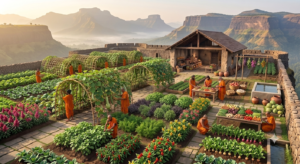
Imagine stepping into a bustling monastery garden in 17th-century Western India. Long before “farm-to-table” dining and “zero-waste” living became modern buzzwords, the great philosopher-saint Samarth Ramdas Swami was putting these exact ideas into practice!
In the final part of his botanical work, Baag Prakaran, he blends practical agriculture, music, and deep ecological wisdom. Let’s explore these rich Marathi verses—grouped by their core themes—to see how ancient traditions meet modern sustainability.
1. Colors, Spices, and Sacred Immunity
तुळसी काळी त्रिसेंदरी । त्रिसिंगी रायचचु रायपेटारी । गुलखत निगुलचिन कनेरी । नानाविध मखमाली ॥ २० ॥
Tulasi kali Trisendari | Trisingi rayachachu rayapetari | Gulakhata nigulachina kaneri | Nanavidha makhamali || 20 ||
काळा वाळा मरुवा नाना । कचोरे गवले दवणा । पाच राजगिरे नाना । हळदी करडी गुलटोप ॥ २१ ॥
Kala vala maruva nana | Kachore gavale davana | Pacha rajagire nana | Haladi karadi gulatopa || 21 ||
Ramdas Swami didn’t just design a garden for sustenance; he created a vibrant feast for the senses and an outdoor pharmacy. Bright, velvety Makhmali blooms and Kaner (Oleander) brought color to the landscape, while sweet marjoram (Marwa) filled the air with soothing aromas.
Beyond beauty, this section highlights an ancient healthcare system. Black Tulsi (Holy Basil) and Turmeric acted as powerful antibacterial protectants. Meanwhile, five varieties of Rajgira (Amaranth) supplied protein-rich superfood grains to keep everyone nourished.
2. The Monastery Kitchen & Underground Safety Net
वांगी चाकवत मेथी पोकळर । माठ शेपु खोळ बसळा । चवळी चुका वेल सबळा । अंबु जिरें मोहरी ॥ २२ ॥
Vangi chakavata methi pokalara | Matha shepu khola basala | Chavali chuka vela sabala | Ambu jire mohari || 22 ||
कांदे मोळकांदे माईणमुळें । लसूण आलें रताळें । कांचन कारिजे माठमुळें । सुरण गाजरें ॥ २३ ॥
Kande molakande mainamule | Lasuna ale ratale | Kanchana karije mathamule | Surana gajare || 23 ||
The monastery garden operated with total self-reliance. Daily meals featured fresh leafy greens like Methi (Fenugreek), Shepu (Dill), Chuka (Sorrel), Mathamule (Edible Amaranth Root) and Brinjals cooked with aromatic cumin and mustard.
Below the soil lay a hidden backup plan: root crops like Garlic, Ginger, Carrots, Sweet Potatoes, and massive Suran (Elephant Foot Yam). Because these underground powerhouses stored easily without spoiling, they provided critical nutrition during lean months or severe droughts.
3. Multifunctional Gourds: Food, Water, and Music!
भोंपळे नानाप्रकारचे । लहान थोर पत्रवेलीचे । गळ्याचे पेढ्या सांगडीचे । वक्र वर्तुळ लंबायमान ॥ २४ ॥
Bhopale nanaprakarache | Lahana thora patraveliche | Galyache pedhya sangadiche | Vakra vartula lambayamana || 24 ||
गंगाफळ काशीफळें क्षीरसागर । सुगरवे सिंगाडे देवडांगर । दुधे गंगारूढे प्रकार । किनऱ्या रुद्रविण्याचे ॥ २५ ॥
Gangaphala kashiphale kshirasagar | Sugarave singade devadangara | Dudhe gangarudhe prakara | Kinarya rudravinyache || 25 ||
Gourds were the undisputed stars of ancient vertical gardening. Growing easily over fences and rooftops with minimal water, they yielded round, curved, and elongated fruits. But their use didn’t end in the kitchen:
Dried bottle gourds were hollowed out to create light, portable water jugs (Kamandalu). Even more remarkable, specific varieties were custom-grown to build the acoustic resonance shells for classical instruments like the Rudra Veena—a brilliant example of zero-waste craftsmanship!
4. Summer Hydration and Gut Health
वाळक्या कांकड्या चिवड्या । कोहाळे सेंदण्या सेंदाड्या । खरबुजा तरबुजा कलंगड्या । द्राक्षी मिरवेली पानवेली ॥ २६ ॥
Valakya kakadya chivadya | Kohale sendanya sendadya | Kharabuja tarabuja kalangadya | Drakshi miraveli panaveli || 26 ||
डोडक्या पारोशा पडवळ्या । चवळ्या कारल्या तोंडल्या । घेवड्या कुहिन्या खरसमुळ्या । वेली अळूचमकोरे ॥ २७ ॥
Dodakya parosha padavalya | Chavalya karalya tondalya | Ghevadya kuhinya kharasamulya | Veli aluchamakore || 27 ||
To tackle scorching Indian summers, the garden yielded juicy Watermelons, Muskmelons, and Cucumbers to keep resident monks and passing travelers hydrated. Vines of Black Pepper (Mirveli) and Betel leaf (Panveli) added zest and digestive aid.
To balance diets naturally, climbing creepers produced fiber-rich, therapeutic vegetables like Karela (Bitter Gourd), Padwal (Snake Gourd), Tondli (Ivy Gourd), and Alu (Taro leaves)—supporting digestion and regulating sugar levels.
5. A Lesson in Ecological Humility
अठराभार वनस्पति । नामें सांगावीं किती । अल्प बोलिलों श्रोतीं । क्षमा केली पाहिजे ॥ २८ ॥ इति ॥
Atharabhara vanaspati | Name sangavi kiti | Alpa bolilo shroti | Kshama keli pahije || 28 || Iti ||
After documenting dozens of species, Ramdas Swami gracefully pauses and steps back:
“There are thousands of species of flora (Athrabhaar Vanaspati) in creation—how many names can one possibly record? I have mentioned only a tiny fraction. O wise listeners, kindly forgive any omissions.”
He reminds us that human knowledge is just a drop in the ocean compared to nature’s infinite diversity. Rather than trying to master or claim nature, our ultimate duty is to respect, protect, and care for the living world around us.
|| Jay Jay Raghuveer Samarth ||
Informative