
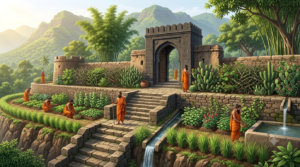
When the 17th-century saint Samarth Ramdas Swami set up his monastery atop the fort of Sajjangad (Parali), he needed more than just a place for meditation—he needed a living, self-sustaining ecosystem. He laid out his practical vision in “Baag Prakaran” (Writings on Gardens and Botany), a botanical guide showing how natural security, village healthcare, and environmental care can thrive together.
Part 1 (Verses 1–10) captures the foundation of this setup: building natural thorny fences for safety, growing wild fruits for quick nutrition, raising medicinal herbs for community care, and planting deep-rooted grasses to protect the hill’s topsoil.
Here is how Ramdas Swami laid down this green foundation in simple, classic Marathi verses.
- Setting the Plan & Building Live Fortress Fences
Ramdas Swami starts with a simple conversation about what to plant, moving right into establishing thorny hedges. These species formed a living security barrier around the fort while providing natural remedies.
प्रसंग निघाला स्वभावें । बागेमध्यें काय लावावें ।
म्हणूनि घेतलें नांवें । कांहींएक ॥ १ ॥
Prasanga nighala svabhave | Bagemadhye kaya lavave |
Mhanuni ghetale nave | Kahieka || 1 ||
कांटी रामकांटी फुलेंकांटी । नेपती सहमुळी कारमाटी ।
सावी चिलारी सागरगोटी । हिंवर खैर खरमाटी ॥ २ ॥
Kati Ramakati phulekati | Nepati sahamuli karamati |
Savi chilari sagaragoti | Hivara khaira kharamati || 2 ||
Species like Khair and Chilari formed physical barriers. At the same time, plants like Sagargoti (Fever Nut) supplied local villagers with natural treatments for fevers.
- Nature’s Pantry: Hygiene, Wild Berries, and Drought Protection
Instead of relying on outside resources, the sanctuary cultivated hardy wild berries for sustenance, natural cleansers for daily living, and drought-resistant succulents to hold the soil together.
पांढरफळी करवंदी तरटी । आळवी तोरणी चिंचोरटी ।
सिकेकाई वाकेरी घोंटी । करंज विळस समुद्रशोक ॥ ३ ॥
Pandharaphali karavandi tarati | Alavi torani chinchorati |
Sikekai vakeri ghoti | Karanja vilasa samudrashoka || 3 ||
अव्हाटी बोराटी हिंगणबेटी । विकळी टांकळी वाघांटी ।
शेर निवडुंग कारवेटी । कांटेशेवरी पांगेरे ॥ ४ ॥
Avhati borati hinganabeti | Vikali takali vaghati |
Shera nividunga karaveti | Kateshevari pangere || 4 ||
Here, Shikekai acted as an organic soap, while wild fruits like Karwand and Toran offered fresh nourishment. Succulents like Nivdung (Cactus) stabilized hill soil and conserved water during harsh summer months.
- The Natural Pharmacy: Immunity Boosters and Pain Remedies
Healthcare was integrated directly into the landscape. Ramdas Swami catalogued herbs that could treat inflammation, digestive issues, and common seasonal illnesses.
निरगुडी येरंड शेवरी । कासवेद कासळी पेरारी ।
तरवड उन्हाळ्या कुसरी । शिबी तिव्हा आंबोटी ॥ ५ ॥
Niragudi eranda shevari | Kasaveda kasali perari |
Taravada unhalya kusari | Shibi tivha amboti || 5 ||
कांतुती काचकुहिरी सराटी । उतरणी गुळवेल चित्रकुटी ।
कडोची काटली गोमाटी । घोळ घुगरी विरभोटी ॥ ६ ॥
Kantuti kachakuhiri sarati | Utarani gulavela chitrakuti |
Kadochi katali gomati | Ghola ghugari virabhoti || 6 ||
Herbs like Nirgudi and Erand (Castor) were used to relieve joint and muscle pain, while Gulvel (Giloy) served as a core remedy to boost daily immunity.
- Water Conservation, Shelter, and Sturdy Native Timber
To ensure long-term stability, the sanctuary featured deep-rooted grasses to filter water and tall bamboo and timber trees for eco-friendly construction.
भोंस बरू वाळा मोळा । ऊंस कास देवनळा ।
लव्हे पानि पारोस पिंपळा । गुंज कोळसरे देवपाळा ॥ ७ ॥
Bhonsa baru vala mola | Us kasa devanala |
Lavhe pani parosa pimpala | Gunja kolasare devapala || 7 ||
वेत कळकी चिवारी । ताड माड पायरी पिंपरी ।
उंबरी अंबरी गंभिरी । अडुळसा मोही भोंपळी ॥ ८ ॥
Veta kalaki chivari | Tada mada payari pimpari |
Umbari ambari gambhiri | Adulasa mohi bhopali || 8 ||
साव सिसवे सिरस कुड । कोळ कुंभा धावडा मोड ।
काळकुडा भुता बोकडा । कुरंडी हिरंडी लोखंडी ॥ ९ ॥
Sava sisave sirasa kuda | Kola kumbha dhavada moda |
Kalakuda bhuta bokada | Kurandi hirandi lokhandi || 9 ||
विहाळ गिळी टेंभुरणी । अविट एणके सोरकिन्ही ।
घोळी दालचिनी । कबाबचिनी जे ॥ १० ॥
Vihala gili tembhurani | Avita enake sorakinhi |
Gholi dalachini | Kababachini je || 10 ||
Aromatic Wala (Vetiver) grass roots naturally filtered drinking water and prevented soil erosion on slopes. Meanwhile, Bamboo (Kalak) and Rosewood (Sisam) supplied material for construction, alongside essential health remedies like Adulsa for cough relief and warm spices like Dalchini (Cinnamon).
The Wisdom Behind the Design
Samarth Ramdas Swami’s Baag Prakaran shows that true sustainability starts with thoughtful planning. By choosing native species that protect, heal, feed, and conserve, this 17th-century sanctuary offers a timeless lesson in living in harmony with nature.
|| Jay Jay Raghuveer Samarth ||
Subscribe
0 Comments
Oldest